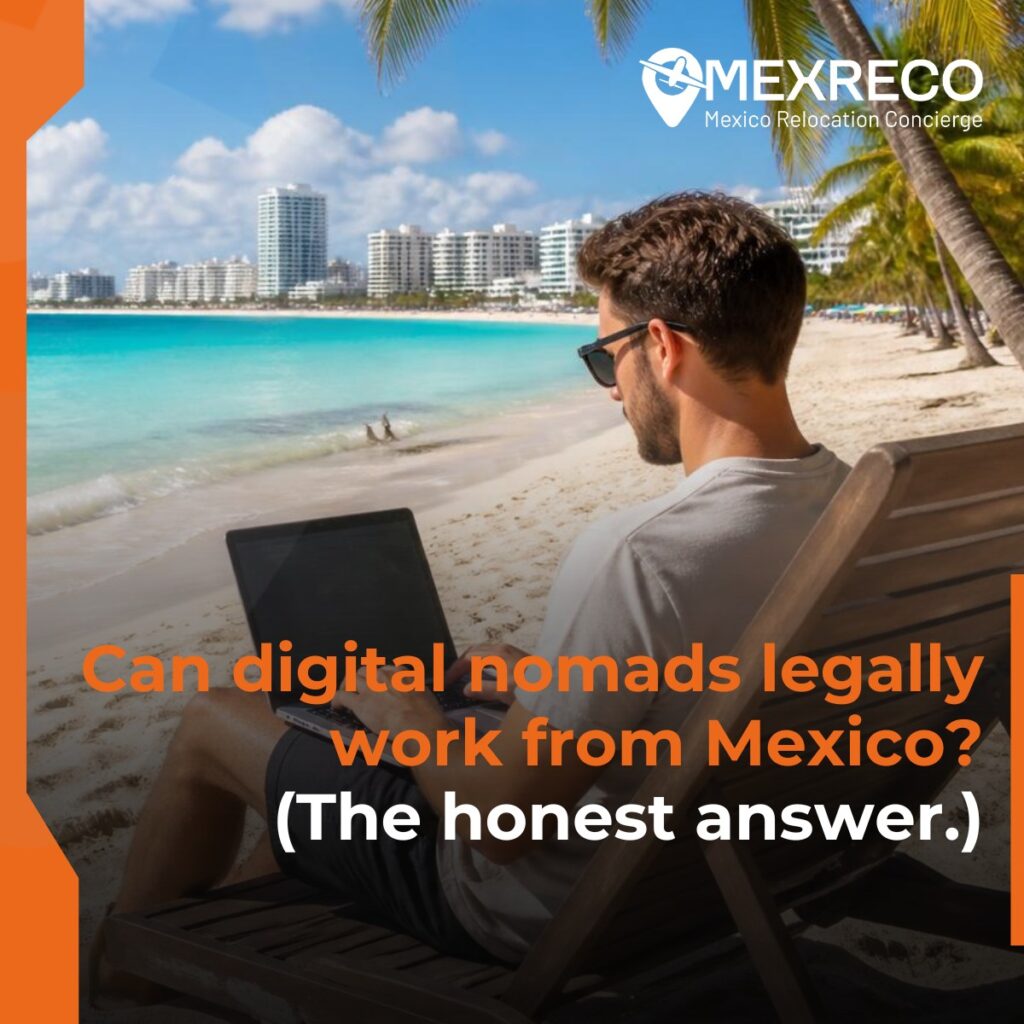
Can Digital Nomads Legally Work from Mexico? Complete Guide for Remote Workers in Cancún
Cancún has become one of the most searched destinations for digital nomads in Latin America. The combination of Caribbean beaches, reliable high-speed internet infrastructure, an established international community, active coworking spaces, direct flight connectivity, and a cost of living well below major North American or European cities makes it a natural choice for location-independent professionals.
But there’s a conversation that needs to happen more consistently in the nomad community before people arrive: what is your actual legal status while you’re working from Mexico? If your answer is ‘tourist visa,’ you may be working from a legal foundation shakier than you think.
The Legal Reality of Working on a Mexican Tourist Permit
When you arrive in Mexico as a citizen of the US, Canada, the EU, the UK, or most other countries, you receive the Forma Migratoria Multiple (FMM) automatically — valid for up to 180 days. What it authorizes: tourism, leisure, vacation, and recreational activities. What it does NOT authorize:
- Performing work activities (actividades remuneradas) in Mexican territory — even for a foreign employer.
- Signing contracts or conducting commercial activities in Mexico.
- Obtaining an RFC (Mexico’s federal tax ID).
- Opening a bank account at most major Mexican financial institutions.
- Establishing any form of fiscal or commercial presence in Mexico.
What Is the Grey Zone — and What Are the Real Risks?
Most digital nomads working from Cancún on tourist permits are not actively creating immediate problems. Mexican immigration enforcement doesn’t track remote workers at coworking laptops. Most people complete their 180 days and re-enter without incident. But the grey zone creates specific, real complications:
- Banking limitations: Without residency and an RFC, major Mexican banks will not open accounts for you. This limits your ability to pay rent by transfer, set up utility payments, or build any local financial infrastructure.
- Visa run risks: Repeatedly leaving and re-entering to reset the 180-day permit is not a sustainable legal strategy. Immigration officers at Cancún airport have discretion to deny re-entry to people who appear to be living in Mexico without proper residency — and this discretion is exercised more frequently than most online sources acknowledge.
- Tax exposure: Spending 183 or more days in Mexico in a calendar year can create Mexican tax residency — reporting obligations on worldwide income, regardless of where it originates. Applicable tax treaties between Mexico and your home country are critical, but the exposure exists and requires professional evaluation.
- Legal recourse limitations: In a rental dispute, contract issue, or employment situation, your ability to seek legal remedy is significantly more complicated without legal residency status.
⚠ The grey zone is not an emergency for most people in it. But it is a foundation with cracks. For someone building a life, a business, or a professional presence in Cancún, it’s not a foundation worth building on when a solid alternative is accessible.
Temporary Residency:
The Right Legal Foundation for Digital Nomads
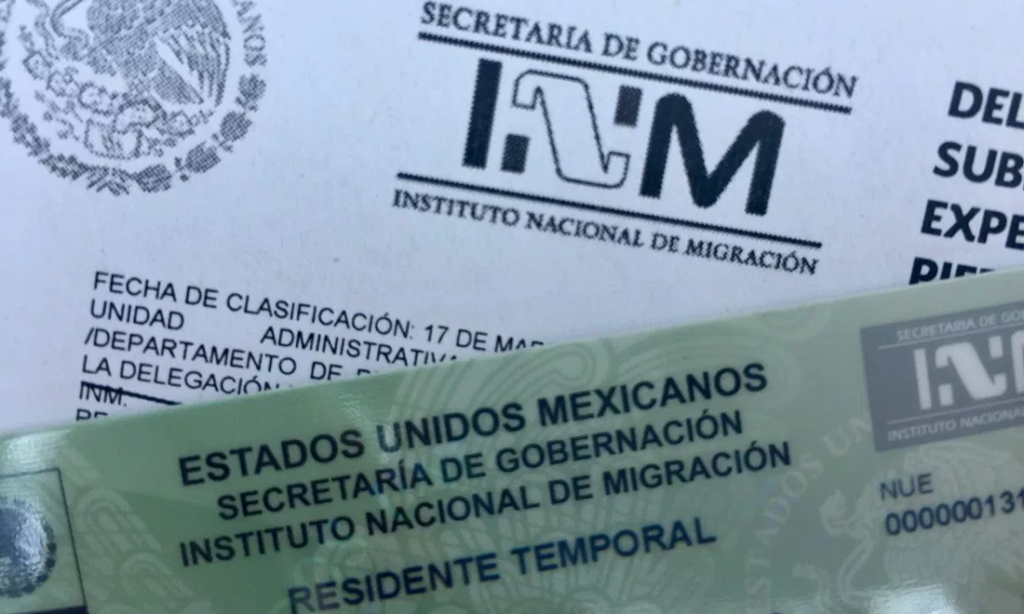
Temporary Residency (Residente Temporal) is Mexico’s immigration status for people who intend to live in the country for more than 6 months. It is the correct legal foundation for digital nomads establishing themselves in Cancún.
What Temporary Residency provides:
- Legal right to reside in Mexico for 1 year, renewable annually up to 4 years.
- Authorization to perform work activities — including remote work for foreign employers.
- Eligibility to obtain an RFC (federal tax ID).
- Access to Mexican banking at major institutions.
- Ability to sign contracts, lease property, and establish fiscal presence.
- Clear path to Permanent Residency after 4 consecutive years.
- Elimination of the 180-day limit and visa run requirement.
Life on Tourist Permit (FMM) Max 180 days per entry No authorization to work Cannot obtain RFC No Mexican bank account Visa run required to continue Immigration denial risk on re-entry Limited legal recourse in disputes | Life with Temporary Residency 1 year, renewable to 4 years Full right to live and work RFC available — banking unlocked Mexican banking fully accessible No exit/re-entry requirement Stable legal status — no risk Full civil law standing in Mexico |
Income Requirements: Do You Qualify for Temporary Residency?
Temporary Residency via the income route requires demonstrating consistent monthly income meeting INM’s minimum threshold — approximately $1,500–$2,200 USD per month as a general 2025-2026 reference (updated annually with the Mexican minimum wage).
What counts as qualifying income: employment income from a foreign employer, freelance income (with consistent monthly bank statements), investment income or dividends, pension payments, and business income with documentation.
For variable-income freelancers, the savings/assets route is an alternative: demonstrating a bank balance equivalent to approximately 12 months of the income threshold ($18,000–$26,000 USD in liquid savings).
⚠ Important procedural note: Temporary Residency must be initiated at a Mexican consulate in your home country before arriving in Mexico. You cannot begin the process from inside Mexico on a tourist permit. Build at least 8–10 weeks into your planning timeline from consulate appointment to arrival with new status.
💡 If you earn $1,500+/month in verifiable income, or have $20,000+ in liquid savings, you likely qualify. The process is manageable with proper guidance. Don’t let the paperwork prevent you from building a legal foundation for your life in Cancún.
How to Get Your RFC as a Digital Nomad in Mexico
The RFC (Registro Federal de Contribuyentes) is Mexico’s federal taxpayer ID. For digital nomads with Temporary Residency, it unlocks:
- Opening Mexican bank accounts at major institutions.
- Receiving payments from Mexican clients or platforms.
- Issuing facturas (official Mexican invoices) for services to Mexican entities.
- Filing taxes in Mexico if you cross the tax residency threshold.
To obtain your RFC you need: your Temporary or Permanent Residency card, a CURP number (issued with your residency card), and a Mexican address with proof (lease, utility bill, or bank statement). Registration is done through the SAT portal or at a SAT office. A Mexican accountant experienced with expat filings can complete this efficiently.
Banking for Digital Nomads in Cancún
:
With an RFC and residency card, major Mexican banks are accessible: BBVA México, Banorte, Santander México, and HSBC México. Bring all documentation — banks have become more stringent about compliance documentation for foreign residents in recent years.
Practical interim solutions while establishing residency:
- Wise (TransferWise): Multi-currency management, near-interbank exchange rates for MXN spending. Works without Mexican residency.
- Charles Schwab Bank (US clients): Reimburses all ATM fees globally. Highly popular among US-based nomads.
- Revolut (European clients): Multi-currency account with good exchange rates and Mexico ATM access.
Tax Residency vs. Immigration Residency: Understanding the Difference
This distinction confuses many nomads and has real consequences if misunderstood.
Immigration residency (Temporary or Permanent) is determined by the INM — it establishes your legal right to be in Mexico, work, and access banking.
Tax residency is a separate determination by the SAT — Mexico’s tax authority. You become a Mexican tax resident if you spend 183 or more days in Mexico in a calendar year, regardless of immigration status. What this means:
- You may have an obligation to report worldwide income to the SAT.
- Mexico-source income is taxable regardless of residency status.
- Tax treaties between Mexico and your home country determine how double taxation is resolved.
The critical point: most digital nomads with primarily foreign-source income, structured correctly with professional advice, do not end up paying significant Mexican income tax — because applicable tax treaties typically provide relief. But this requires professional evaluation, not assumption. Consult a Mexican tax accountant before you cross the 183-day threshold in any calendar year.
The Best Coworking Spaces and Nomad-Friendly Areas in Cancún
Cancún’s infrastructure for remote workers has developed significantly. Reliable fiber internet is widely available in residential and commercial zones.
Coworking spaces worth knowing:
- WeWork Cancún: Professional facilities, meeting rooms, business district location. International standard.
- Selina Cancún: Community-focused, social atmosphere, flexible workspace options, regular events.
- Local independent coworkings in Puerto Cancún and Cancún Centro: More affordable, good facilities, local character.
Nomad-friendly neighborhoods:
- Puerto Cancún: Modern, walkable, strong café and restaurant culture. Most popular with established nomads and expat professionals.
- Cancún Centro (SM 22, 23, 25): More affordable, local character, good café density.
- Playa del Carmen (Riviera Maya): Has a larger nomad-specific community and more developed coworking ecosystem than central Cancún — worth considering as an alternative base.
How MEXRECO Helps Digital Nomads Set Up in Cancún the Right Way
MEXRECO works with digital nomads at every stage of the legal and logistical setup process:
- Immigration assessment: We evaluate your income profile, savings, nationality and timeline, and recommend the appropriate residency pathway.
- Consular preparation: We prepare your complete documentation package for the Temporary Residency application at your home country consulate.
- RFC registration: We connect you with a Mexican tax accountant who specializes in expat and digital nomad filings.
- Banking setup: We facilitate access to banking advisors who understand the documentation requirements for foreign residents.
- Tax evaluation: We connect you with a tax professional who can assess your situation relative to Mexican tax law and applicable bilateral treaties.
- Housing support: We help you find housing in the right neighborhood with proper contract review and guarantor solutions.
Living in Cancún as a digital nomad is one of the best quality-of-life decisions you can make. Doing it with the right legal structure makes it sustainable — not just exciting for a season. MEXRECO makes sure the foundation is solid before the lifestyle begins.
FAQ — Frequently Asked Questions
Q: Can digital nomads legally work from Mexico?
A: Yes, but the legal basis depends on your immigration status. Mexico’s tourist permit (FMM) does not authorize work activities — even remote work for a foreign employer. For digital nomads who want to live and work in Cancún legally, Temporary Residency (Residente Temporal) is the appropriate status. It authorizes residence and work, grants banking access and an RFC, and is renewable annually up to 4 years.
Q: Does Mexico have a digital nomad visa?
A: Mexico does not currently offer an immigration category specifically named ‘digital nomad visa.’ Temporary Residency is the correct and widely used status for remote workers who want to live in Mexico for more than 6 months. It provides all the rights needed for a digital nomad’s professional and financial life in Mexico
Q: How long can I stay in Mexico as a digital nomad without residency?
A: Without Temporary Residency, you can stay up to 180 days on a tourist permit (FMM). This permit cannot be extended from inside Mexico. Repeatedly leaving to reset it — ‘visa runs’ — is documented but risky: immigration officers can and do deny re-entry to people who appear to be residing in Mexico without proper immigration status.
Q: What income do I need for Temporary Residency in Mexico as a digital nomad?
A: As a general 2025-2026 reference, the income threshold is approximately $1,500–$2,200 USD per month in verifiable income. The exact threshold changes annually with the Mexican minimum wage — always verify current figures with a licensed immigration attorney before applying. Savings/assets can substitute for the income route if your income is variable.
Q: Do digital nomads pay taxes in Mexico?
A: Spending 183 or more days in Mexico in a calendar year can create Mexican tax residency, regardless of where your income originates. Applicable tax treaties between Mexico and your home country often provide significant relief. The outcome depends on your specific situation — consult a Mexican tax accountant experienced with international clients before crossing the 183-day threshold.
Q: What is an RFC and how do digital nomads in Mexico get one?
A: The RFC (Registro Federal de Contribuyentes) is Mexico’s federal tax ID. For digital nomads, it’s required to open a Mexican bank account, receive payments from Mexican clients, and issue official invoices. To obtain one, you need Temporary or Permanent Residency, a CURP number, and a Mexican address with proof. A Mexican accountant experienced with expat filings can complete the registration efficiently.
Q: Can I open a bank account in Mexico as a digital nomad?
A: Yes, once you have Temporary Residency and an RFC. Major Mexican banks — BBVA, Santander, Banorte, HSBC — require both for account opening. On a tourist permit, local banking is not accessible. Interim solutions: Wise (multi-currency, near-interbank rates), Charles Schwab (US clients, no ATM fees globally), Revolut (European clients).
Q: What are the best coworking spaces in Cancún for digital nomads?
A: Well-regarded options include WeWork Cancún (professional facilities, business district), Selina Cancún (community-focused, flexible, social), and independent local coworkings in Puerto Cancún and Cancún Centro (more affordable, local character). Many nomads also work productively from the city’s cafés, which generally offer reliable Wi-Fi and a pleasant environment.
Q: How does MEXRECO help digital nomads relocate to Cancún legally?
A: MEXRECO provides a comprehensive setup for digital nomads: immigration assessment and consular preparation for Temporary Residency, RFC registration coordination, banking setup facilitation, tax situation evaluation, and housing support with proper contract review. The goal is ensuring every piece of the legal and logistical foundation is in place before the lifestyle begins.