
Moved to Cancún Without a Plan? Here's How to Fix That Now
You made the move. That part — the decision, the leap, the actual doing of it — took real courage. Nobody who packs up their life and moves to another country is doing it carelessly.
But if you’ve been in Cancún, Playa del Carmen, Tulum, or anywhere along the Riviera Maya for a while now, and things haven’t quite clicked into place the way you expected — you’re not alone. And more importantly, you’re not behind. You’re just at a different starting point than most guides assume.
This article is written specifically for people who are already here. Not planning to move. Already living it. And realizing that some of the foundational pieces — immigration status, banking, healthcare, housing — are either not sorted, not clear, or not working the way they should.
Everything in this situation is fixable. Here’s where to start.
You’re Not Alone — This Is More Common Than You Think
One of the most consistent things we hear in our first conversation with expats already in the Riviera Maya is some version of: ‘I feel like I should have figured this out already.’ There’s an unspoken shame about not having a clean, sorted situation — especially when social media is full of expats who make the life look effortless.
Here’s the reality: the vast majority of people who move internationally without professional guidance end up with at least some of these gaps. Not because they’re incompetent — but because the process of relocating to another country involves multiple interconnected legal, financial, and administrative systems that most people only discover exist once they run into a wall.
You didn’t know what you didn’t know. That’s not a character flaw. That’s the normal starting point for someone who made a major life change without a roadmap.
The 6 Things That Go Sideways Without a Relocation Plan
After working with hundreds of expats already living in the Riviera Maya, these are the six gaps we see most consistently — and the ones that compound each other most directly when left unaddressed.
1. Immigration Status Left on Autopilot
The tourist permit (FMM) gets stamped in your passport, gives you 180 days, and then… most people don’t think about it again until it’s almost expired — or already has been. The problem is that staying beyond the permit, doing visa runs repeatedly, or just hoping nobody notices is not a plan. It’s an accumulating liability.
The consequences of an irregular immigration situation aren’t always immediate — but they compound. A visa run that gets flagged. A lease you can’t sign because you have no legal status. A bank account that can’t be opened. A tax year where you weren’t supposed to be here and didn’t file. Each piece creates friction in the next.
2. Banking Blocked by Missing Documentation
This is one of the most practically frustrating gaps. Without a Temporary Residency card and an RFC (Mexico’s federal tax ID), most major Mexican banks won’t open an account for you. And without a local bank account, basic daily functions become complicated: paying rent by transfer, setting up utilities in your name, receiving local payments, building any financial infrastructure in Mexico.
Many expats solve this temporarily with Wise, Revolut, or US bank accounts that work internationally. These are fine as bridges — but they’re not a foundation. And every month spent without a local account is a month of exchange rate fees, cash complications, and landlords who aren’t enthusiastic about your payment options.
3. Healthcare Coverage That Nobody Has Actually Checked
Most expats in the Riviera Maya who haven’t set up a proper healthcare plan are in one of two situations: they believe their home country coverage applies to them (it almost certainly doesn’t for extended international stays), or they’ve decided to ‘just pay out of pocket’ and haven’t done the math on what a serious medical event actually costs.
Cancún and the Riviera Maya have excellent private hospitals — Hospital Amerimed, Hospital Galenia, Star Médica are all well-equipped and internationally experienced. But they operate on a fee-for-service basis. A hospitalization, a surgical procedure, or a serious emergency without insurance can cost $15,000–$50,000 USD out of pocket. That’s not a risk worth carrying when insurance costs $150–$500 per month.
4. Housing Arrangements That Weren’t Set Up Right
Whether it’s a contract that was signed without legal review, a landlord relationship that’s become complicated, an electricity bill that arrived three times what was expected, or a deposit situation that’s now in dispute — housing is where a lot of the ‘I didn’t plan this’ reality shows up most concretely.
Rental contracts in Mexico are civil law documents drafted by the landlord. Without a local attorney reviewing them, you may have signed something that puts you at a significant disadvantage in a dispute — and may not even know it until you’re in one.
5. Tax Situation That’s Never Been Assessed
If you’ve spent 183 or more days in Mexico in a calendar year, you may be a Mexican tax resident — with obligations to report income to the SAT (Mexico’s tax authority) that you haven’t been meeting. Whether this applies to you, what your obligations actually are, and how any bilateral tax treaty between Mexico and your home country affects your situation are all questions that require a professional answer, not an assumption.
The cost of an unresolved tax situation grows over time. A consultation with a qualified tax accountant who works with international clients is not expensive relative to the cost of a tax problem that’s been compounding for two or three years.
6. Relying on Contradictory Informal Advice
Facebook groups, expat cafés, well-meaning acquaintances — the Riviera Maya is full of people who have opinions about how the system works. Some of that information is accurate. A significant portion of it is outdated, incomplete, inapplicable to your specific situation, or simply wrong.
The most damaging pattern isn’t getting one bad piece of advice. It’s making a series of decisions over months based on a patchwork of informal information, each one reinforcing the last, until the cumulative result is a situation that’s more complicated to untangle than it would have been to structure correctly from the start.
What 'Getting Your Situation in Order'
Actually Looks Like
The good news is that there’s a clear sequence for addressing these gaps — and it’s not as overwhelming as it might feel when you look at all of them at once. The pieces are interconnected, and addressing them in the right order makes each subsequent step easier.
|
Priority |
What Needs to Happen |
Why This Order |
|
1 — Immigration |
Temporary Residency application (if not yet obtained) |
Everything else — banking, RFC, legal contracts — unlocks with residency status |
|
2 — Tax ID |
RFC registration with SAT |
Required for banking; also triggers proper fiscal standing |
|
3 — Banking |
Open Mexican bank account at major institution |
Unlocks normal financial operations: rent transfers, utilities, local payments |
|
4 — Healthcare |
International or local private health insurance |
Non-negotiable — addresses the highest-risk gap immediately |
|
5 — Housing |
Contract review if ongoing; legal lease if renewing |
Protects your existing arrangement and future commitments |
|
6 — Tax assessment |
Consultation with expat tax accountant |
Establishes what your obligations are and catches any unaddressed years |
Immigration: How to Regularize Your Status If You’re Still on a Tourist Permit
If you’re currently on a tourist permit — or worse, your permit has already expired — the path forward depends on your specific situation. Here’s a practical overview:
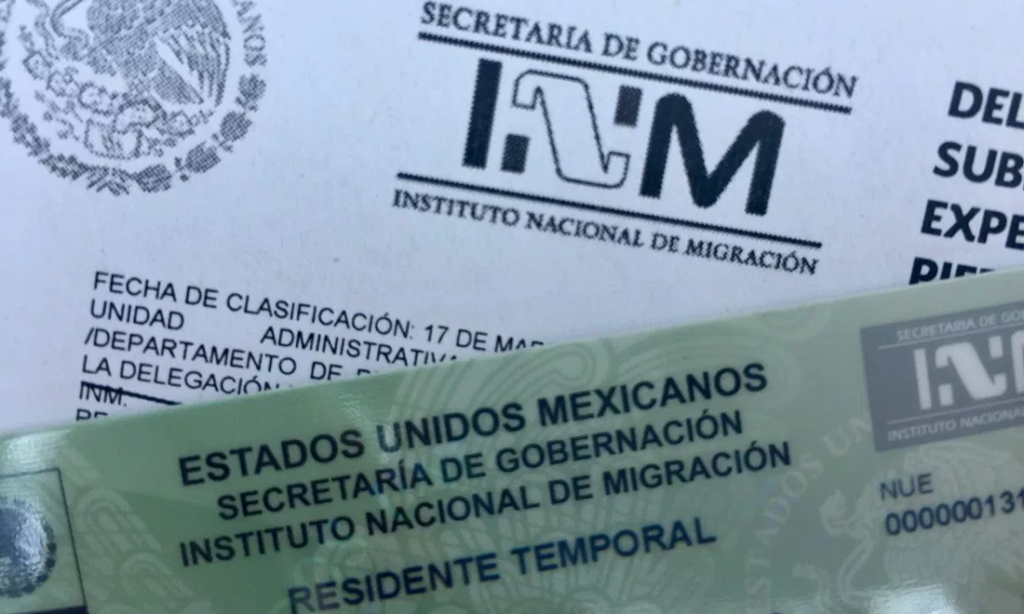
- If your tourist permit is still valid: the best option is to apply for Temporary Residency at a Mexican consulate in your home country before your current permit expires. This requires returning home temporarily, completing the consulate application, and re-entering Mexico with a residency visa stamped in your passport, after which you complete the process at the local INM office.
- If your tourist permit has expired: you will need to exit Mexico, pay any applicable overstay fines at the point of departure, and begin the residency process from outside Mexico. The fines are generally modest (a few hundred USD) relative to the cost of not addressing the situation. The sooner this is done, the simpler it is.
- If you’ve been doing visa runs: this is not a stable long-term strategy. Enforcement at Cancún International Airport has tightened in recent years, and immigration officers have discretion to deny re-entry to individuals who appear to be residing in Mexico without proper immigration status. The risk of a denied re-entry increases with each visa run.
⚠ There is no process for converting a tourist permit to a residency visa from inside Mexico at an INM office. The Temporary Residency process must be initiated outside Mexico at a Mexican consulate. Any service offering to ‘fix your immigration status from Cancún’ without you leaving the country is either describing a different situation or misrepresenting the process.
Banking in Mexico: Why You Can’t Open an Account and How to Fix It
The banking situation is often described by expats as ‘Kafkaesque’ — and it can feel that way until you understand the actual requirements. The path is clear once you have the prerequisites.
Major Mexican banks (BBVA, Banorte, Santander, HSBC) require for account opening: a Temporary or Permanent Residency card, an RFC (Registro Federal de Contribuyentes), and a Mexican address with proof (lease contract, utility bill, or official correspondence). All three are necessary. Partial documentation typically results in rejection.
Once you have your residency card (which comes with a CURP number), obtaining your RFC through the SAT is the next step — and with the RFC in hand, a major Mexican bank account is accessible. The process from residency card to open bank account typically takes 2–4 weeks with proper preparation.
While you work through this process, international bridging solutions remain useful: Wise for multi-currency management and near-interbank peso spending, Charles Schwab for US clients (unlimited ATM fee reimbursement globally), and Revolut for European clients.
Healthcare: What to Do If You’re Still Uninsured in Mexico
:
If you’re currently living in the Riviera Maya without active health insurance, this is the most urgent gap to close — because it’s the one that can create the most immediate and severe financial consequences.
Your options, in order of practicality for someone already in Mexico:
- International health insurance (Cigna Global, Aetna International, Bupa Global, Allianz Care): Can typically be enrolled online without needing to be in your home country. Coverage begins after a waiting period (usually 30 days). Monthly premiums for a person in their 40s: $150–$350 USD. For those in their 60s+: $300–$600.
- Local Mexican private insurance (GNP Seguros, AXA México, Mapfre): Mexico-only coverage, lower premiums, generally requires residency documentation. Good long-term option once immigration status is sorted.
- Short-term travel insurance as a bridge: While not ideal for long-term coverage, a short-term international travel insurance policy can provide some protection while you set up permanent coverage. Read the fine print carefully — many have duration limits and pre-existing condition exclusions that make them unsuitable as a primary health plan.
How MEXRECO Helps Expats Already in the Riviera Maya
MEXRECO was built for exactly this situation as much as for people still planning a move. We work with expats at every stage — including people who’ve been in Mexico for months or years and are ready to get things properly structured.
For expats already in the Riviera Maya, our process starts with a comprehensive assessment of your current situation: immigration status, banking gaps, healthcare coverage, housing arrangements, and tax exposure. From there, we build a prioritized plan — not a generic checklist, but a sequence tailored to your specific situation, timeline, and starting point.
We then coordinate the specialists you need: immigration attorneys who know the Cancún INM process, tax accountants who work specifically with international residents, healthcare advisors who understand the expat insurance landscape, and civil attorneys who can review your housing situation.
FAQ — Frequently Asked Questions
Q: I moved to Cancún without a plan — what should I do first?
A: The most important first step is getting a clear picture of your current situation across four areas: immigration status, banking access, healthcare coverage, and housing arrangements. A professional relocation assessment — which MEXRECO offers free for a limited time — will identify which gaps are most urgent and what the correct order of resolution looks like for your specific situation. Starting with immigration status is almost always the right move, since residency status unlocks banking, RFC, and legal standing.
Q: Can I fix my immigration status if I'm already living in Cancún on a tourist permit?
A: Yes, but the process must be initiated outside Mexico. Temporary Residency cannot be converted from a tourist permit at an INM office inside Mexico — it must be applied for at a Mexican consulate in your home country. If your permit is still valid, the cleanest option is to return home, complete the consular process, and re-enter with a residency visa. If your permit has expired, you’ll pay any applicable overstay fines at departure before beginning the residency process.
Q: Why can't I open a bank account in Mexico even though I live here?
A: Most major Mexican banks require a Temporary or Permanent Residency card and an RFC (Mexico’s federal tax ID) to open an account for a foreign resident. A tourist permit — even one that has been renewed multiple times through visa runs — does not meet this requirement. Once you have legal residency and an RFC, account opening at BBVA, Banorte, Santander or HSBC becomes accessible.
Q: What healthcare options are available if I'm already living in Mexico without insurance?
A: International health insurance from providers like Cigna Global, Aetna International or Bupa Global can typically be enrolled online from Mexico — you don’t need to be in your home country. Coverage usually begins after a 30-day waiting period. Local Mexican private insurance (GNP, AXA, Mapfre) is a less expensive alternative once you have residency documentation. A short-term travel insurance policy can serve as a bridge while you set up permanent coverage, though its limitations should be carefully reviewed.
Q: Is it possible to regularize my situation in Mexico if I've been here for a long time without residency?
A: Yes. Length of time in Mexico without proper status doesn’t create permanent barriers to regularization — it does create a to-do list. Depending on your specific situation, this may involve exiting Mexico to complete a consular application, paying any applicable overstay fines, and addressing any tax years where obligations may have accrued. The process is more manageable when handled proactively with professional guidance than when addressed reactively under pressure.
Q: What does a MEXRECO relocation assessment cover for expats already living in Mexico?
A: MEXRECO’s relocation assessment for expats already in the Riviera Maya covers: current immigration status and the correct path to regularization, banking gaps and the steps needed to access Mexican banking, healthcare coverage situation and options, housing arrangements and any contract review needs, and tax exposure assessment. The output is a prioritized action plan tailored to your specific situation — not a generic checklist.
Q: How long does it take to sort out a relocation situation that wasn't set up correctly?
A: The timeline depends heavily on which gaps exist and their severity. For someone who needs Temporary Residency from scratch, the process typically takes 8–12 weeks from initiating the consular application to receiving the residency card in Mexico. Banking follows within 2–4 weeks after residency. Healthcare can be arranged in days. Tax assessment is an ongoing process. With proper guidance and no major complications, most expats in this situation reach a fully sorted baseline within 3–4 months.